Stay-at-Home Parent Resume: How to Return to Work After a Career Break
Returning to work after raising kids? How to write a resume that addresses career gaps, highlights transferable skills, and gets you interviews. Includes real examples and templates.
You spent years raising children. Now you’re ready to return to work.
But your resume has a gap. Maybe 3 years. Maybe 10. And you’re wondering: Will anyone take me seriously?
Employers hire parents returning from career breaks every single day. What matters is how you present your experience on the page.
How to Address Your Career Gap
You have several options for handling the gap on your resume. Pick the one that fits your situation.
Option 1: Include Parenting as a Work Entry
You can list your time as a stay-at-home parent directly in your work history. Use a professional title that reflects what you actually did.
Example:
Family Manager / Primary Caregiver
Self-Employed | 2019-2026

• Managed household budget of $85,000 annually, reducing expenses by 15% through strategic planning
• Coordinated schedules, appointments, and activities for family of 5
• Researched and selected educational programs, resulting in children meeting developmental milestones early
• Organized and led volunteer initiatives at local school, coordinating 20+ parent volunteers
• Maintained property and vendor relationships, negotiating contracts for home services
This approach works well when:
- Your gap is significant (5+ years)
- You have measurable achievements from this period
- You want to address the gap head-on
Option 2: Use a Brief Explanation in Your Summary
If you’d rather not list parenting as work experience, acknowledge the gap in your professional summary.
Example:
“Marketing professional with 8 years of experience in brand management and digital campaigns. After a 4-year career break to raise children, returning to the workforce with refreshed skills in social media marketing and analytics. Recently completed Google Analytics certification and HubSpot Content Marketing course.”
Option 3: Focus on Dates, Not Gaps
Use years only (not months) for your employment dates. This naturally minimizes smaller gaps.
Marketing Manager, ABC Company | 2015-2019
Returning to work after family caregiving
What NOT to Do
- Don’t leave the gap unexplained. Hiring managers will assume the worst if you don’t address it.
- Don’t apologize. Caring for your family was a valid choice. Present it confidently.
- Don’t exaggerate. “CEO of Household Operations” might seem clever, but it can come across as unprofessional.
Transferable Skills You Already Have
Parenting develops real professional skills. The hard part is putting them into business language.
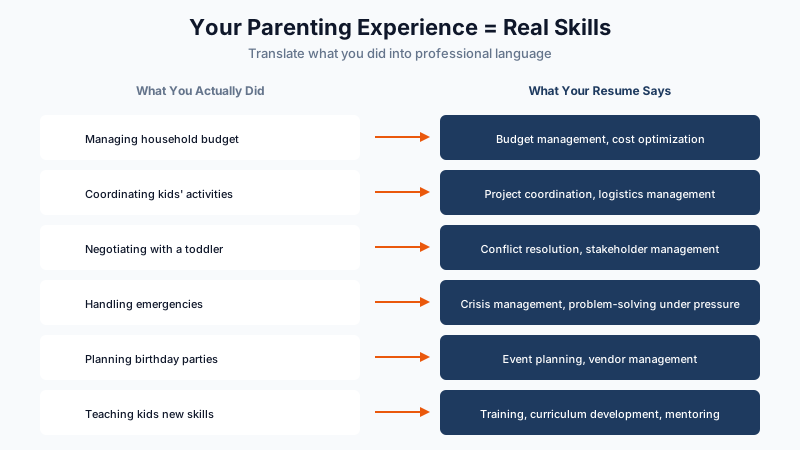
| Parenting Experience | Professional Translation |
|---|---|
| Managing household budget | Financial planning, budget management, cost optimization |
| Scheduling kids’ activities | Project coordination, calendar management, logistics |
| Negotiating with toddlers | Conflict resolution, stakeholder management, persuasion |
| Handling emergencies | Crisis management, problem-solving under pressure |
| Coordinating with teachers | Stakeholder communication, collaboration |
| Planning birthday parties | Event planning, vendor management, budget adherence |
| Teaching kids new skills | Training, curriculum development, patience |
| Managing multiple kids’ needs | Multitasking, prioritization, time management |
Listing these skills isn’t enough. Show them in action through your bullet points.
Weak: “Good at multitasking”
Strong: “Coordinated daily schedules for 3 children across 5 different activities while managing household operations and volunteer commitments”
What to Include Beyond Parenting
Your resume shouldn’t only focus on parenting. Include anything you did during your break that shows you stayed sharp.
Volunteer Work
Treat volunteer experience like paid work. PTA leadership, fundraisers, community events. Put them on your resume with the same detail as paid positions.
Example:
Volunteer Coordinator
Lincoln Elementary School PTA | 2022-2025

• Led annual fundraiser generating $45,000, exceeding goal by 20%
• Recruited and managed team of 25 parent volunteers
• Implemented new online registration system, reducing administrative time by 60%
• Coordinated communication between teachers, parents, and administration
Freelance, Part-Time Work, and Certifications
Any paid work during your break counts, even small consulting or freelance gigs. Same goes for courses and certifications.
Example:
CONTINUING EDUCATION

• Google Analytics Certification (2025)
• HubSpot Content Marketing Certification (2025)
• Project Management Fundamentals, Coursera (2024)
Pro Tip: If you haven’t updated your skills recently, now is the time. Many certifications are free and can be completed in a few weeks. They signal to employers that you’re serious about returning. Once you have them, ReviseCV can tailor your resume to highlight these credentials prominently.
Resume Format for Career Returners
The traditional chronological resume highlights gaps. Consider these alternatives.

The Hybrid (Combination) Format
This format leads with skills and qualifications before listing work history. It puts what you can do above when you did it.
Structure:
- Contact Information
- Professional Summary (address the gap here)
- Core Competencies / Skills (relevant skills for target role)
- Professional Experience (chronological, including volunteer work)
- Education & Certifications
Professional Summary Examples
For a Marketing Professional Returning:
“Marketing professional with 7 years of experience in digital campaigns, brand management, and content strategy. After a 5-year career break to raise children, returning with updated certifications in Google Analytics and social media marketing. Led volunteer marketing initiatives including rebranding local nonprofit, resulting in 40% increase in donations.”
For a Finance Professional Returning:
“Finance professional with 8 years of experience in accounting and financial analysis. After a 4-year career break, completed refresher courses in current accounting software and maintained CPA credentials through continuing education. Looking for a role where I can put those analytical skills back to work.”
How to Handle Interview Questions
Your resume will get you the interview. Be prepared to discuss your break confidently.
“Why did you take time off?”
Good answer: “I was the primary caregiver for my children during their early years. It was the right choice for our family. Now that they’re in school full-time, I’m ready to get back to work and put the skills I’ve been building to use.”
Avoid: Apologizing, over-explaining, or being defensive.
“How have you stayed current?”
Good answer: “I’ve maintained my professional development through [specific certifications, courses, or volunteer work]. I’ve also stayed connected to the industry through [professional associations, LinkedIn, relevant reading]. I’m confident I can get up to speed quickly.”
“Are you committed to staying in the workforce?”
Good answer: “Yes. My kids are in school full-time now, and I have reliable childcare. I’m looking for something long-term where I can do good work and build on it.”
Common Mistakes to Avoid
Mistake #1: Hiding the Gap
Leaving employment dates vague or using tricks to obscure the gap backfires. Recruiters notice, and it erodes trust.
Mistake #2: Underselling Your Parenting Experience
You developed real skills. Own them. Don’t dismiss years of complex logistics, problem-solving, and relationship management as “just staying home.”
Mistake #3: Not Tailoring Your Resume
Generic resumes don’t work, especially when you’re overcoming potential bias. Customize every application.
Mistake #4: Applying Only to Entry-Level Positions
If you had mid-level experience before your break, don’t automatically target entry-level roles. You may need to accept some step-down, but don’t undersell yourself.
Key Takeaways
- Address the gap directly. Don’t hide it. Frame it confidently.
- Translate parenting skills. The skills are real. Use professional language to describe them.
- Include volunteer and freelance work. Any professional activity during your break counts.
- Update your skills. Certifications show you’re serious about returning.
- Use a hybrid resume format. Lead with skills, not chronological gaps.
- Tailor every application. Generic resumes won’t overcome potential bias.
- Practice your story. Be ready to discuss your break confidently in interviews.
Ready to Return?
You have more experience than you think. A career gap doesn’t erase what you know or what you’ve done since.
A good resume makes that obvious to the person reading it.
Quick Win: Not sure how your resume stacks up? ReviseCV’s Resume Score analyzes your resume against real job postings and shows exactly which skills are landing and which keywords you’re missing. Takes about 2 minutes.
Build a fresh resume → using templates designed for the hybrid format, or tailor your existing resume for your target role.
Need both a resume and cover letter that address your career break? The Application Kit includes both, tailored to your specific job target.